

オフィス内装
Archive:
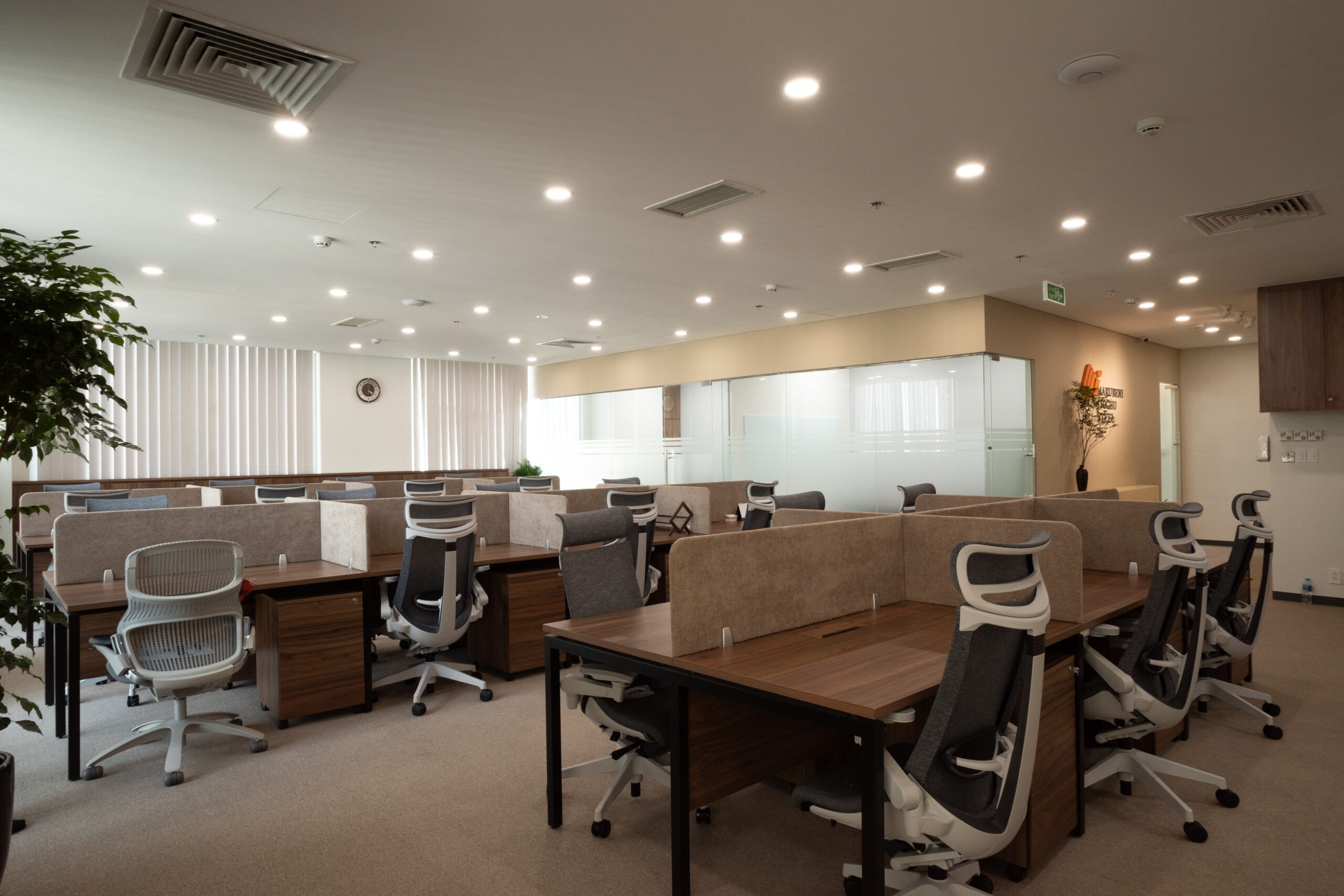
CRAFTEC Vietnam completed a comprehensive interior fit-out for Marubeni-Itochu Steel Vietnam at their Ho Chi Minh City office. Due to their extensive commercial trading operations, the client required a complete space plan revision to resolve severe paper document storage challenges while restoring an open, uncluttered environment for daily staff activities. Custom Floor-to-Ceiling Built-In Storage Engineering The primary project challenge involved housing a massive daily volume of trade documentation, invoices, and commercial files. Consequently, CRAFTEC designed and installed custom floor-to-ceiling built-in cabinet systems paired with mobile shelving units. This engineered layout maximizes vertical storage volume without encroaching on usable floor area. As a result, the primary work floor remains organized, visually clean, and clutter-free. Japanese Execution Standards for Optimized Workspace Flow In addition to high-capacity storage, CRAFTEC reconfigured desk layouts to streamline foot traffic (traffic flow) between operating departments. The new spatial plan prioritizes natural daylighting, which supports staff focus and daily productivity. Combining functional storage capacity with modern workspace aesthetics, CRAFTEC delivered a professional environment that reflects the standards and reputation of a Japanese steel enterprise. 同様のオフィス内装施工事例やサービス詳細、無料相談はCRAFTECへ。 参考:JETRO ベトナム情報
2026/09/17
オフィス内装
リノベーション
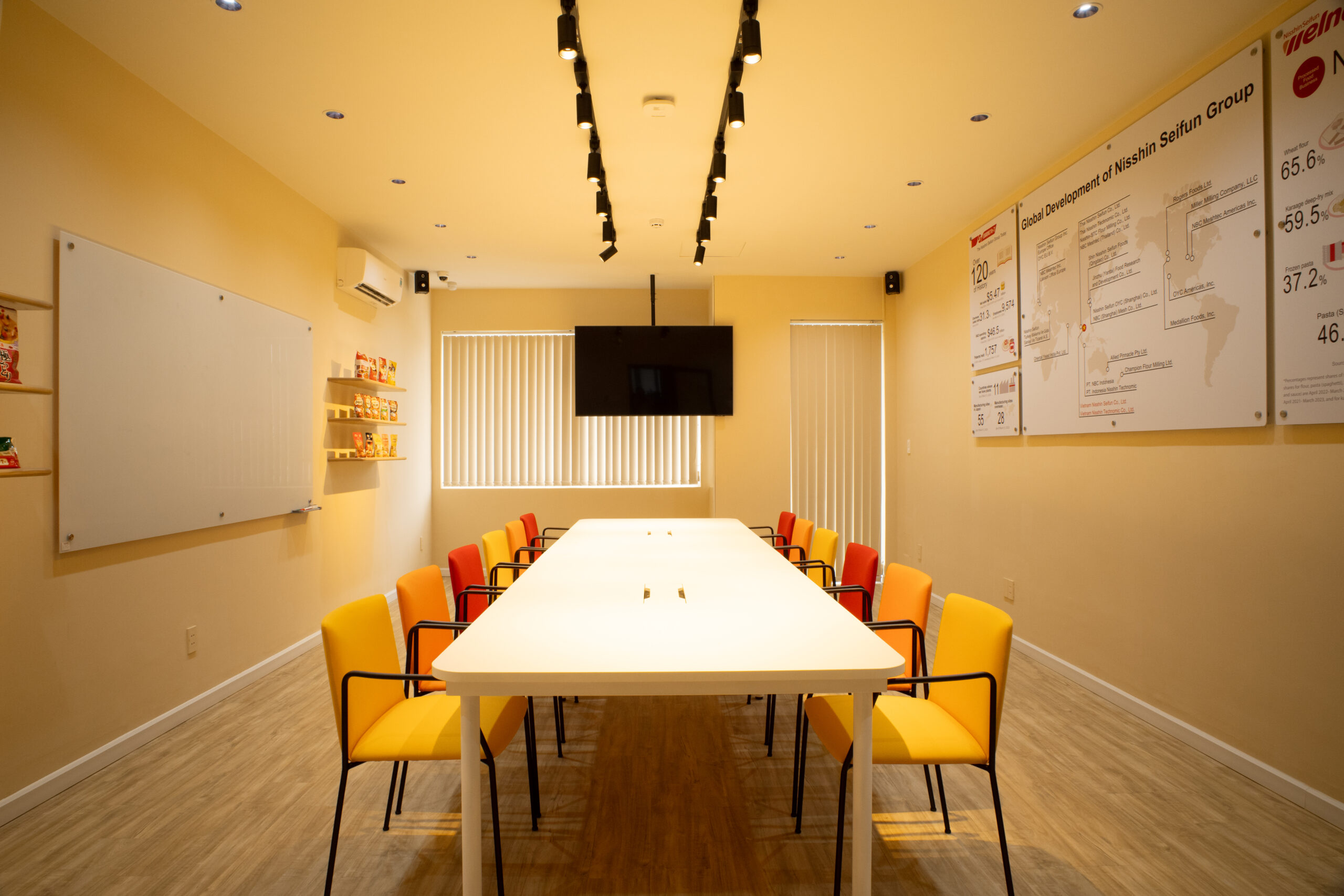
Viet Nam Nisshin Seifun: Commercial Renovation for New B2B Presentation Room CRAFTEC Vietnam recently completed a specialized commercial renovation at Viet Nam Nisshin Seifun’s new Ho Chi Minh City office. To strengthen their local B2B sales capabilities, the company converted part of their existing office layout into a dedicated presentation and product experience room. Specialized Lighting Engineered for Food Presentation Because this space functions as a food presentation showroom, technical precision was essential. Consequently, CRAFTEC selected and installed high Color Rendering Index (CRI) lighting fixtures over the main display tables. This high-CRI lighting presents dishes in their true, vibrant colors, making food displays visually appealing to visiting clients. As a result, Viet Nam Nisshin Seifun can effectively showcase product quality during executive tastings and B2B client meetings. Brand Integration Through Custom Interior Accents In addition to technical lighting, CRAFTEC incorporated brand identity elements directly into the interior design. Specifically, the seating upholstery was custom-crafted using Viet Nam Nisshin Seifun’s exact corporate brand colors. This subtle detail adds a refined visual accent while maintaining a unified, professional corporate environment. 同様のオフィス内装施工事例やサービス詳細、無料相談はCRAFTECへ。 参考:JETRO ベトナム情報
2026/09/17
オフィス内装
リノベーション
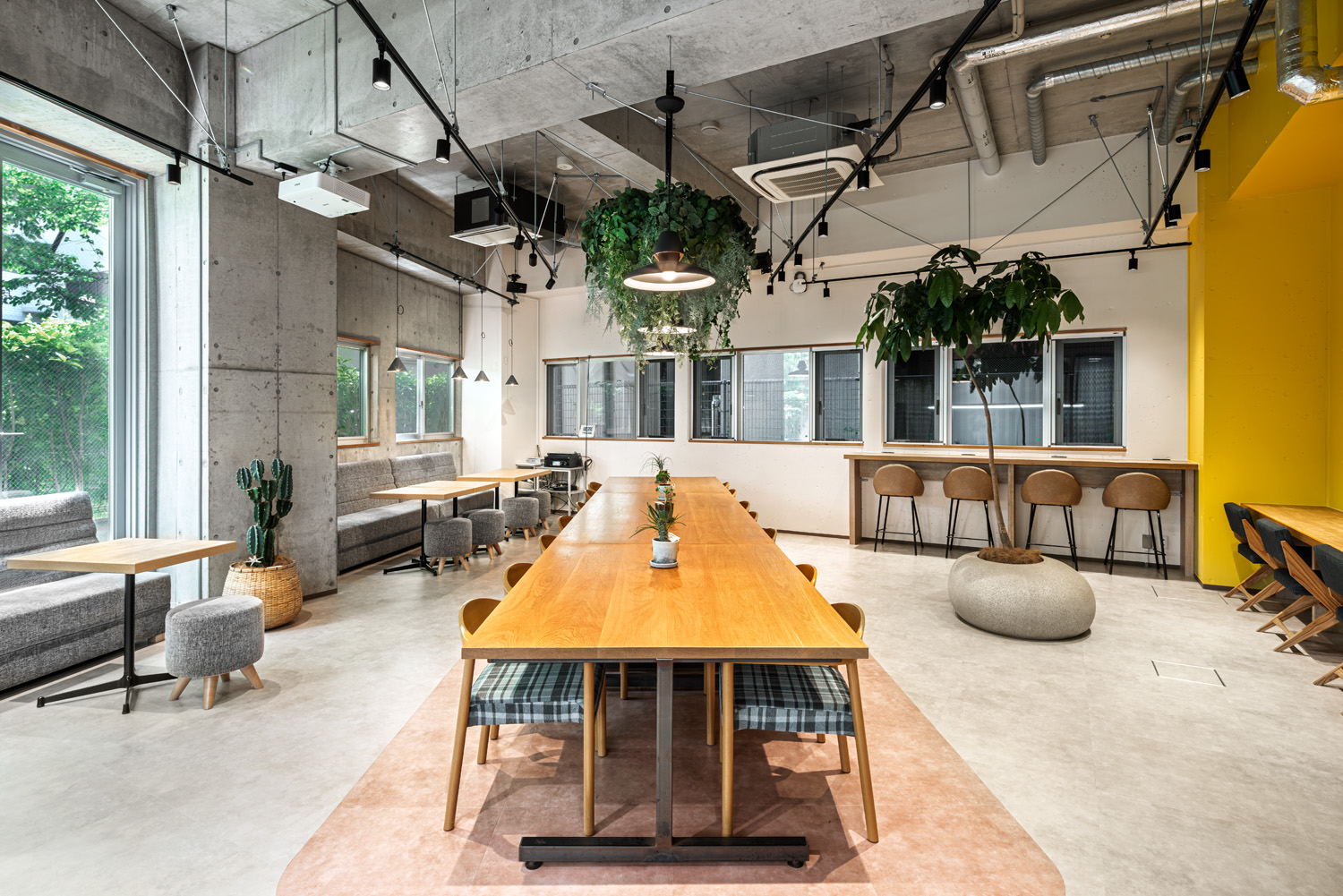
Renovating a commercial facility in Japan demands a precise balance of technical rigor and forward-thinking interior strategy. Craftec Vietnam, an established office fit-out contractor Vietnam, directed the complete interior transformation of KOBO.INC headquarters—our parent enterprise in Kawaguchi City, Saitama Prefecture. 1. Structural Engineering Challenges of RC External Insulation Constructed in 2010, the KOBO.INC property remains a rare commercial building in Japan featuring European Reinforced Concrete (RC) External Insulation. By wrapping the entire concrete frame from the exterior with specialized insulation material, the structure acts as a giant thermal reservoir. During summer, indoor temperatures drop naturally, mirroring the subterranean cool of a cave. Conversely, in winter, retained thermal energy stays locked within the frame, eliminating heat loss. While exceptionally energy-efficient, the original floor layouts no longer supported current headcount or modern departmental workflows. To address this operational bottleneck, Craftec delivered a comprehensive commercial overhaul. Our team revitalized the main reception hall, primary work floors, executive meeting spaces, pantry, restrooms, and central stairwells. 2. Breaking Traditional Design Rules as an Office Fit-out Contractor Vietnam Effective commercial design extends beyond floor planning. Workplaces in Japan traditionally adhere to a conservative four-color safety rule consisting of white, gray, beige, and natural wood tones. Operating daily as an established office fit-out contractor Vietnam, Craftec manages a dynamic market where commercial clients actively pursue bold visual identities. Our design team decided to take the core lessons learned from this expressive Southeast Asian market and inject them directly into the Saitama headquarters renovation. Supported by President Narita's affinity for vivid palettes, we applied intense color plans across collaborative zones—stepping far outside standard Japanese corporate conventions. This deliberate visual strategy replaced muted monochrome layouts with high-contrast elements to create an inspiring environment designed to disrupt daily routine. 3. Applying Japanese Office Design Ho Chi Minh City Concepts to Drive Productivity Why introduce striking color shifts into an adaptation of Japanese office design Ho Chi Minh City teams built for Tokyo? Color serves as a powerful environmental catalyst that recalibrates human focus over a short timeline. When staff work alongside energetic pink and yellow accents balanced by calming green and blue ceilings, their visual perception adapts quickly, turning bold statements into an inspiring backdrop. Craftec applied this architectural strategy to achieve clear workplace goals: Release employees from rigid assumptions about corporate office norms. Stimulate unconstrained problem-solving and critical thinking. Reduce cognitive fatigue while raising everyday output and workplace productivity. 4. Premium Remote Supervision for Office Interior Design Vietnam Projects Craftec's primary design studio in Ho Chi Minh City managed all technical interior specifications remotely throughout the project lifecycle. The successful execution relied heavily on the strict project governance of local construction teams to ensure millimeter-accurate alignment with our digital design plans. This international project validates Craftec's capability in delivering top-tier office interior design Vietnam solutions that combine bold creative direction with strict Japanese engineering standards. https://craftec.vn/en/service/office-interior/ https://www.khobho.co.jp/
2026/06/20
オフィス内装
リノベーション
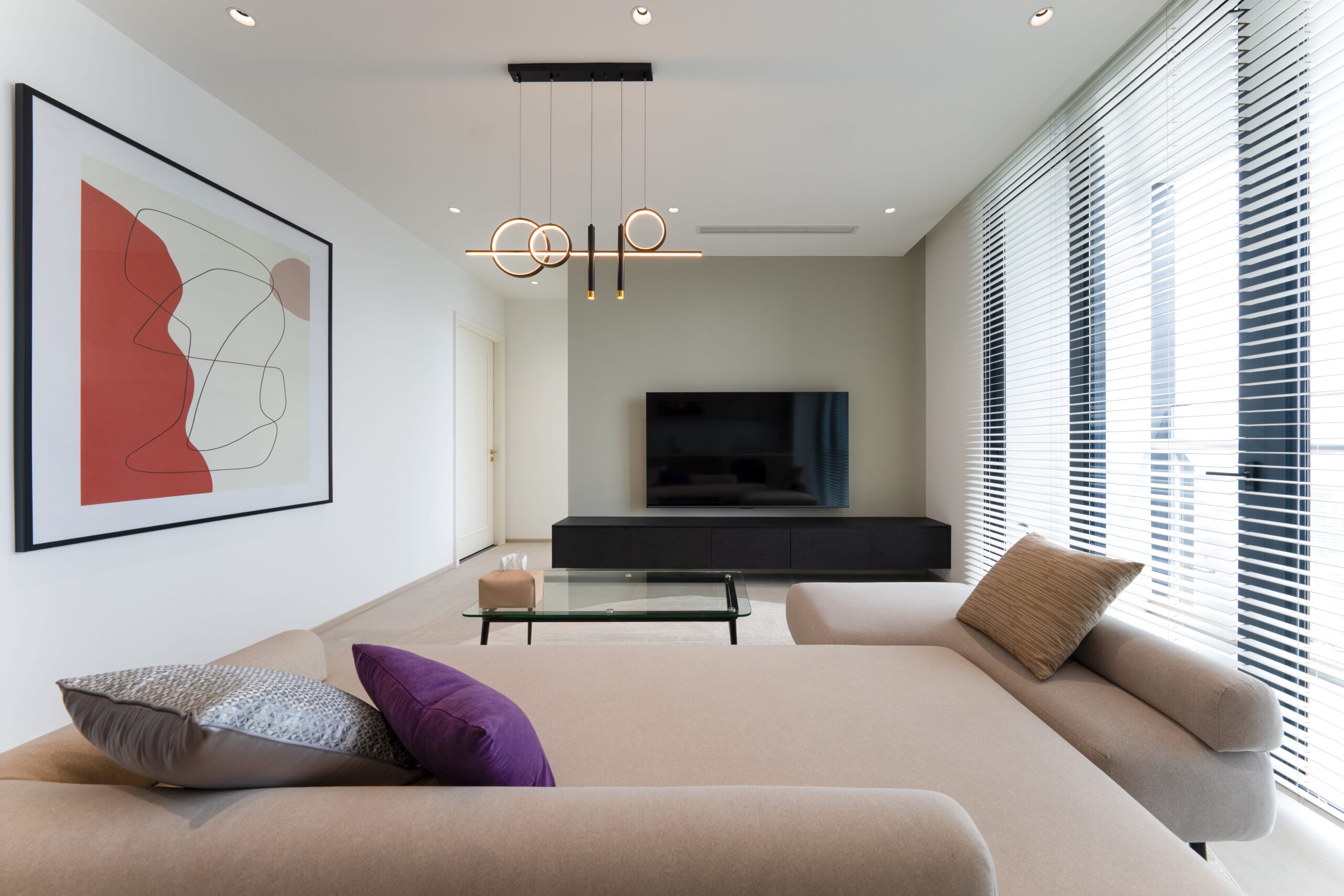
不動産仲介のN-ASSET様からご紹介いただいたコンドミニアムのリノベーション計This is one of our construction project case studies. The design was led by Professor Nakakura of Nakakura Architects & Urban Design, who teaches architecture at the University of Tokyo, while the construction was carried out by CRAFTEC. As the client is not based in Vietnam, we conducted regular coordination via a group LINE chat. In addition to daily construction reports, we also held detailed discussions with Mr. Nakakura by occasionally connecting live video from the site. Thanks to this close communication, we were able to complete the project without any major issues. “Because architecture is something we devote months of effort to create, it is only natural to approach completion photography with the same level of care. The market value of a property owned by the client can significantly change depending on the quality of its architectural photographs.” With this in mind, it was particularly impressive that Mr. Nakakura visited Ho Chi Minh City not only for the final inspection but also to personally conduct the completion photography. Working with an architect provides us with valuable learning opportunities beyond our own design-and-build projects—almost like a form of hands-on training—which helps elevate our capabilities as well. We would like to express our sincere gratitude to the client for entrusting us with this project, and to Mr. Nakakura for his flexible yet precise remote management of the construction site in Vietnam, where conditions differ greatly from those in Japan.
2026/04/07
リノベーション
その他
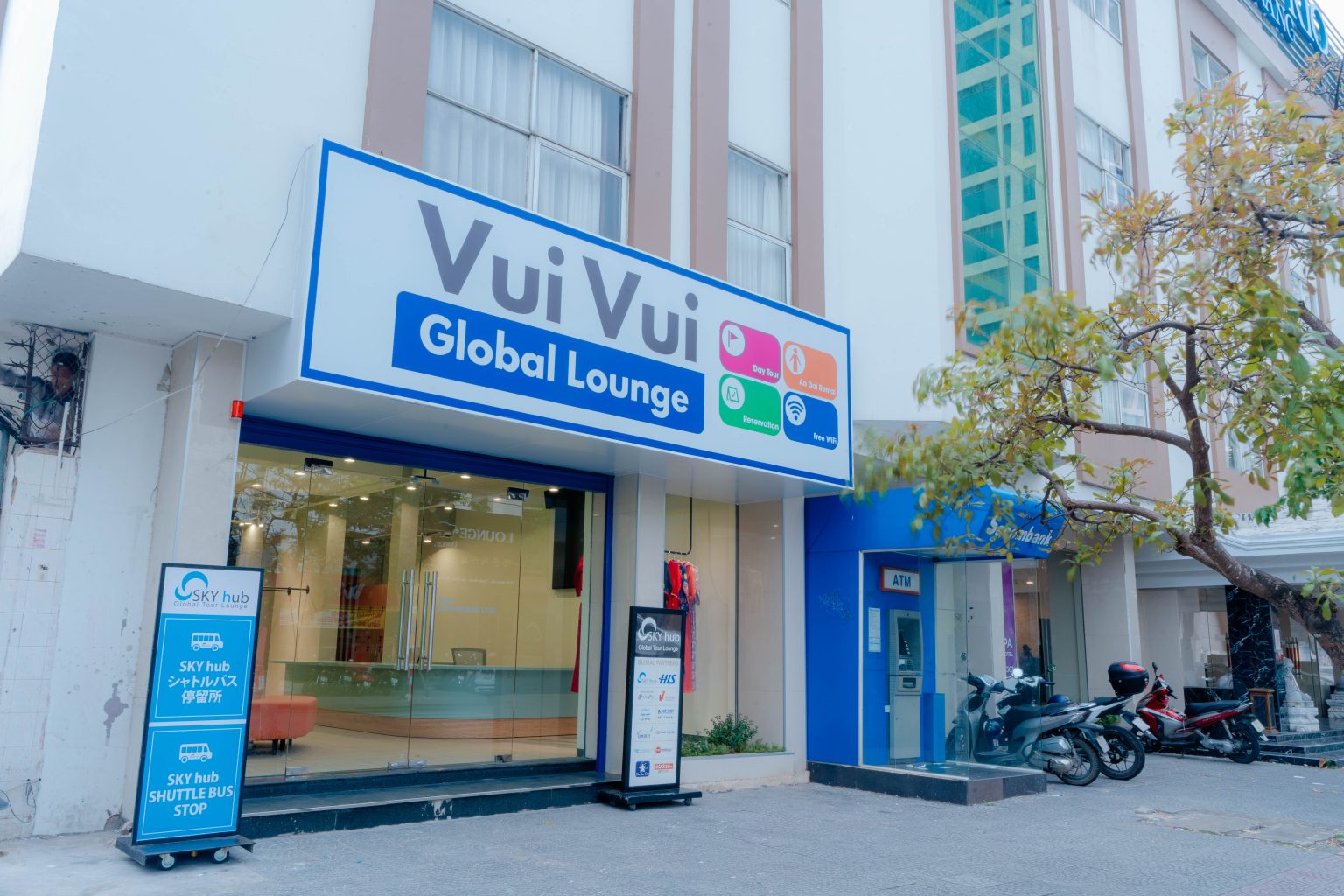
Relocation and Interior Fit-Out for VUI VUI Global Lounge Da Nang (H.I.S.) CRAFTEC Vietnam completed the office relocation and commercial fit-out for VUI VUI Global Lounge Da Nang, operated by the H.I.S. Group. Building on our successful meeting room renovation at H.I.S. Ho Chi Minh City, H.I.S. selected CRAFTEC as their turnkey fit-out contractor for this key expansion in Da Nang. Strategic Layout Plan at GRANDVRIO City Hotel The new space occupies a prime ground-floor corner location at the GRANDVRIO City Hotel in Da Nang. Unlike the previous office, which combined staff workstations and travel services in a single space, this project clearly separates the two functional zones: Travel Lounge: A welcoming, high-engagement zone designed for tourists and client reception. Private Office: A dedicated, secure workspace optimized for daily operations and staff productivity. This clear separation enhances operational privacy while presenting a polished, corporate brand image to visiting clients. Remote Project Management with Full Progress Transparency Because the project management team at H.I.S. was based in Ho Chi Minh City, clear communication was crucial. CRAFTEC implemented a structured remote reporting system throughout the construction process. Our site engineers sent daily progress updates featuring high-resolution photos, architectural sketches, and detailed technical notes. This structured reporting ensured clear communication, zero misunderstandings, and strict adherence to project timelines and safety standards. Vibrant Interior Design Rooted in Local Culture Visible through the hotel’s exterior glass facade, the lounge design creates an open, welcoming environment. CRAFTEC incorporated vibrant green walls, a refined smoke-blue reception desk, and bright orange sofas to craft an inviting atmosphere. Behind the reception, a feature wall illuminated by authentic Hoi An lanterns adds warm, local character. CRAFTEC specifically engineered the layout to make female travelers feel secure and comfortable while trying on traditional Ao Dai garments or relaxing during their trip. https://www.jetro.go.jp/en/invest/
2024/03/03
オフィス内装
工場内装・工業団地
店舗内装
リノベーション
移転