

Column
The “Winning Office” for Executives in the AI Era? -2/3-
2026/01/21

The “Winning Office” for Executives in the AI Era?
Vol. 2: How AI is Revolutionizing Office Layouts
AI Transforms More Than Just Software
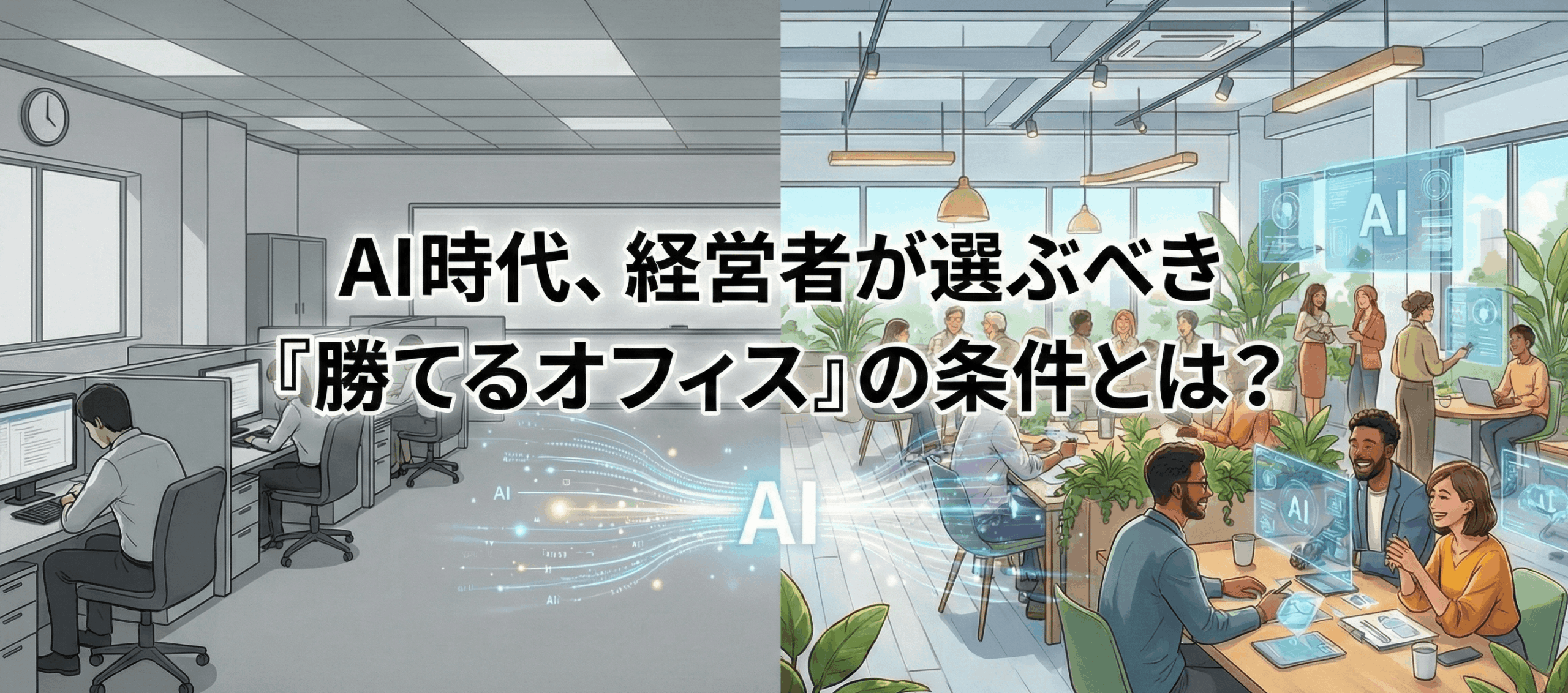
When people hear “AI implementation,” they often assume it’s limited to software or PC-based tasks. However, the rise of AI is bringing fundamental changes to the physical “hardware” of the office. From document volume and desk arrangements to the very nature of meeting rooms- everything is being optimized in tandem with AI integration. In this article, we predict the specific trends in how AI will reshape the modern office.
Turning Storage into Synergy: Will Vietnam Follow Suit?
One of the most certain changes is the drastic reduction in paper documents. Advances in AI-OCR (Optical Character Recognition) technology are digitizing everything, including handwritten notes. As accounting invoices and contract management go digital, massive filing cabinets will disappear from the workspace. Note: While this is a global trend, local regulatory nuances in Vietnam mean the transition may follow a unique trajectory.
So, what happens to that vacated space? It is being reborn as “lounges” and “cafe spaces” designed to foster employee communication. Rent once paid for storage is being redirected as an investment in deepening human relationships. Furthermore, in the Vietnamese office market—where landlord authority is strong and sudden relocation risks exist—having fewer physical assets increases a company’s mobility and agility.
Redefining Meetings: Fewer Large Boardrooms, More Focus
The concept of the “meeting” itself is evolving. Previously, significant time was spent on information sharing and minute-taking. Now, AI handles real-time translation, summarization, and transcription. Consequently, meetings are shifting from “information sharing hubs” to “pure decision-making and brainstorming forums.”
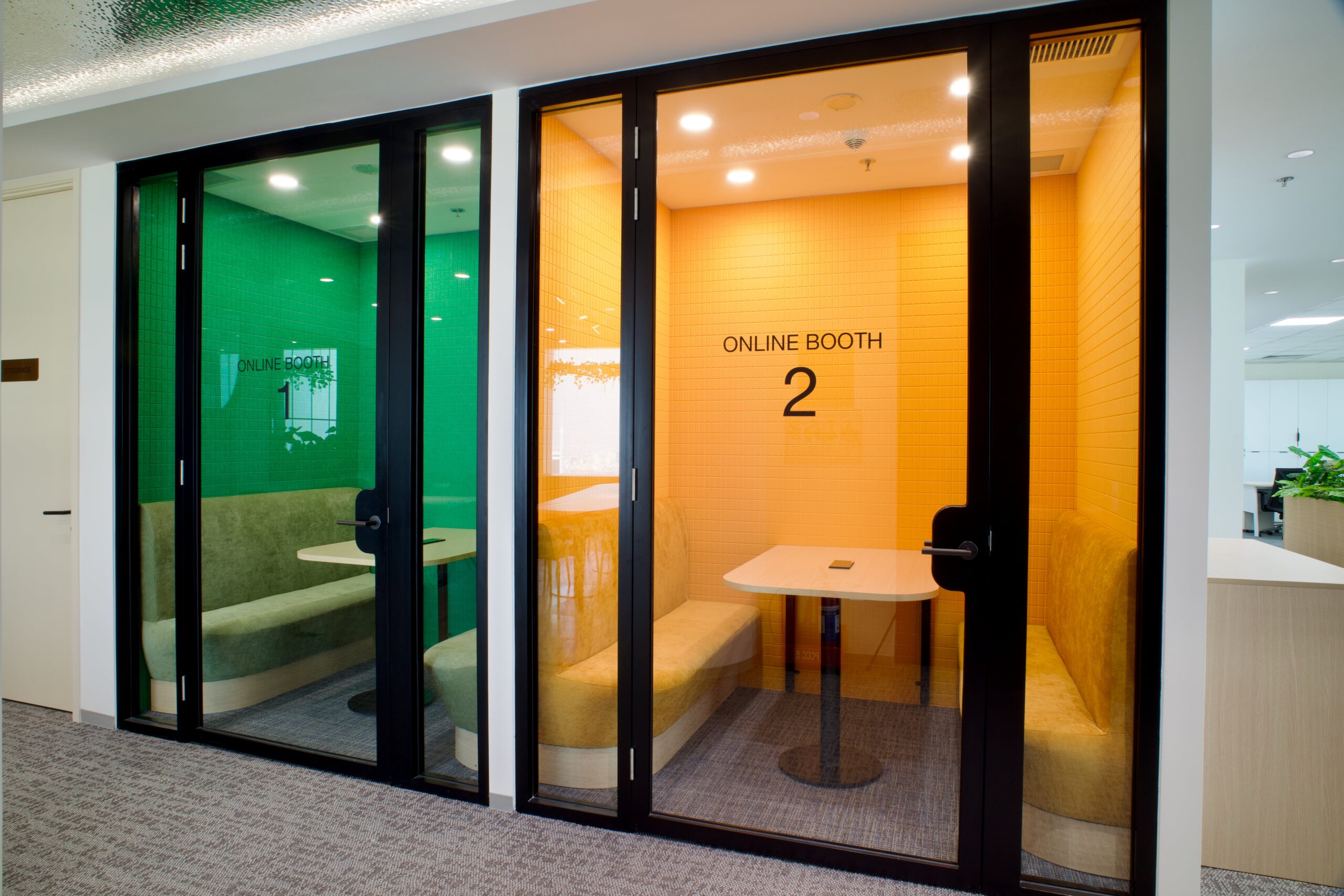
As a result, the demand for large, closed-off boardrooms is declining. In their place, “Huddle Spaces” (informal meeting areas) and standing desks within open zones are becoming essential. Additionally, with hybrid work as the new standard, “Private Phone Booths” for concentrated web conferencing are now a must-have. Layouts that emphasize a clear distinction between “collaborative interaction” and “individual focus” will become the mainstream.
The Era of AI-Generated Office Layouts
Looking ahead, we are entering a future where AI itself designs and optimizes office layouts. By simply inputting data such as employee headcount, department structures, and office attendance rates, AI can automatically generate the most efficient seating arrangements and traffic flow plans. Using IoT sensors to analyze employee movement and congestion, AI will soon provide proactive suggestions, such as: “This area is underutilized; let’s convert it into a focus booth.”
In Japan, “Adaptive Offices”—where AI controls lighting and air conditioning in real-time based on occupancy and task type—are already being introduced. By adopting such data-driven office management in Vietnam, businesses can eliminate wasted space and maximize cost-performance.
Flexibility and data utilization will be the keys.
The office in the AI era is no longer a ‘static box’ completed once and forgotten. It is a dynamic space’ that continuously evolves based on employee behavioral data. Abolishing assigned seating to introduce Hot-desking or Activity-Based Working (ABW) is merely the first step. In our next installment, we will explore how Japanese executives in Vietnam should leverage AI and office design from a management perspective to strengthen their organizations.。
New Topics
Top 5 popular articles